

Juvenile Absence Epilepsy
What is juvenile absence epilepsy?
Approximately 1 to 2 out of 100 people with epilepsy have juvenile absence epilepsy (JAE). Seizures in JAE can be of two main types: absence seizures and generalized tonic-clonic seizures. These seizures usually begin between the ages of 10 to 16 years but rarely may start later. The cause is mostly genetic. A family history is rare, but family members may have similar seizures or other generalized epilepsies. People with JAE usually develop normally.
A Typical Story
Billy, a 12-year-old boy, "blanks out" sometimes and stops playing ball for 10 to 15 seconds during baseball practice. His coach calls his name, but Billy doesn't seem to hear him. He usually blinks a few times and sometimes he starts moving his mouth like he’s chewing something. Usually the seizure ends abruptly and he’s right back to the game. These typically occur 2-5 times a week. On a couple of occasions in the morning, he has had a bigger seizure where his whole body stiffens and then jerks. Those seizures last about 2 minutes.
Learn More
Contact Our HelplineWhat type of seizures are seen?
Absence Seizures
- Absence seizures are seen in all cases.
- Seizures result in staring and unresponsiveness (or impaired responsiveness)
- Their eyes may roll up briefly or the eyelids may flutter.
- Some people may have repetitive movements, like mouth chewing (automatisms).
- Absence seizures usually last 10 to 45 seconds and end abruptly.
- The person can resume normal activity after the seizure and often is not even aware that anything has happened.
- Absence seizures typically are seen less than daily.
- One in 3 people may also have attention, concentration, and memory problems that may improve with treatment of absences.
Generalized Tonic-Clonic Seizures
- Generalized tonic-clonic seizures are seen in about 8 in 10 people.
- They involve whole body stiffening and jerking.
- They usually occur when waking up and last seconds to minutes.
- Their frequency is variable.
How is JAE diagnosed?
Information about your seizure type(s), health and family history, and a physical and neurological examination are the first steps in diagnosing absence seizures.
- An EEG (electroencephalogram) is done to look for possible seizure activity. Hyperventilation and photic stimulation (exposure to rapid flashing lights) are often performed during the EEG. The EEG shows generalized polyspike or spike and wave discharges at 3-4 Hz (cycles per second).
- The EEG shows spike and wave discharges at 3 to 6 Hz (cycles per second) that are generalized (the same on both sides of the brain).
- CT (computed tomography) and MRI (magnetic resonance imaging) scans of the brain are normal and are not indicated in most cases.
- Screening for attention problems is recommended.
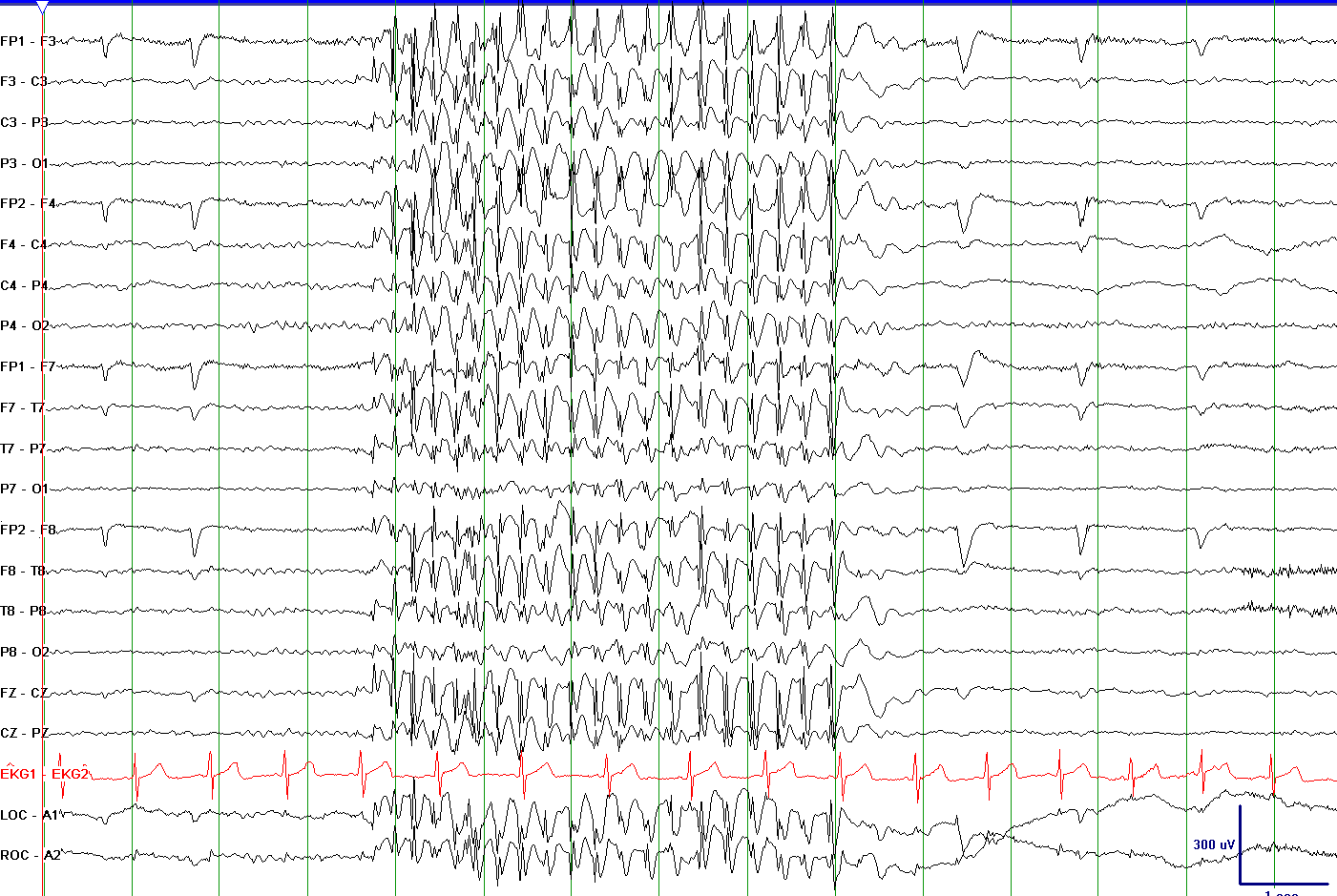
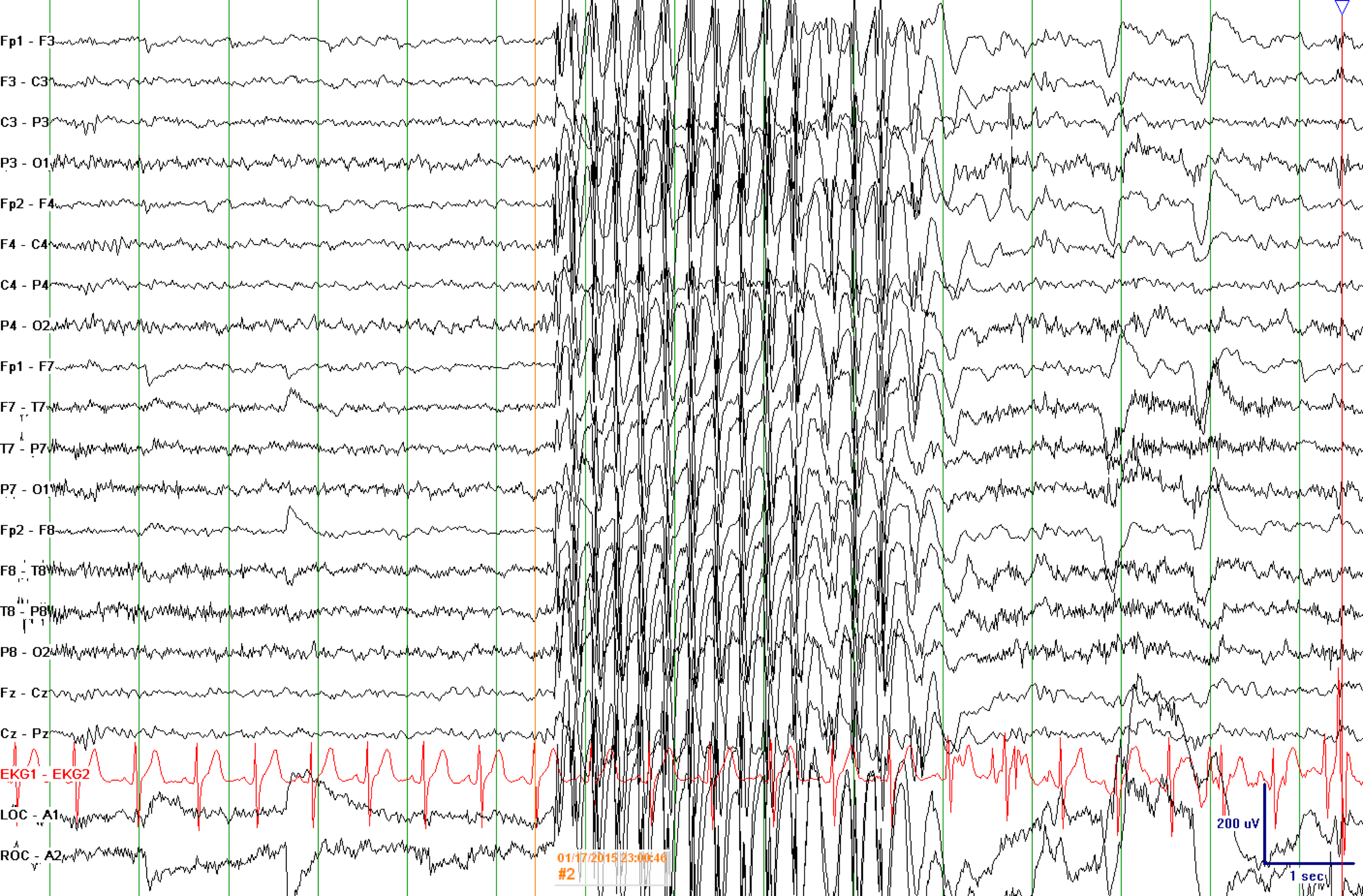
Examples of 3 to 4 Hz generalized spike wave
How is JAE treated?
Juvenile absence epilepsy usually responds to treatment. Medications commonly used in JAE are valproate (Depakote) and lamotrigine (Lamictal).
- Ethosuximide (Zarontin) can be used if absence seizures are not controlled, but does not protect against generalized tonic-clonic seizures.
- If the absences or generalized tonic-clonic seizures are persistent, combining these medications may be helpful.
- Other medications have been used, such as topiramate (Topamax), zonisamide (Zonegran), levetiracetam (Keppra), and benzodiazepines (clobazam). However, these are generally not considered unless valproic acid and lamotrigine have failed or have caused side effects.
- A form of the ketogenic diet may also be considered in cases that don't respond well to medicine.
Learn More
Find Your Local Epilepsy FoundationWhat is the outlook?
JAE usually responds to treatment. It is considered a life-long condition, which means seizure medications will be needed to control the seizures. Attention problems may persist despite successful treatment. Therefore, close monitoring is recommended.
What’s The Difference?
How are juvenile absence epilepsy (JAE) and childhood absence epilepsy (CAE) different?
When Seizures Start
- JAE: usually after age 10 years
- CAE: usually before age 10 years, most often between 5 and 8 years of age
Length of Absence Seizure
- JAE: 10-45 seconds
- CAE: 10-20 seconds
Frequency of Absence Seizures
- JAE: less than daily
- CAE: up to 20-40 times per day
Outlook
- JAE is usually a life-long condition
- CAE often goes away as the child gets older
Learn More:
Donate to Support Our MissionResources
Epilepsy Centers
Epilepsy centers provide you with a team of specialists to help you diagnose your epilepsy and explore treatment options.
Epilepsy Medication
Find in-depth information on anti-seizure medications so you know what to ask your doctor.
Epilepsy and Seizures Helpline
Call our Epilepsy and Seizures Helpline and talk with an epilepsy information specialist or submit a question online.
Tools & Resources
Get information, tips, and more to help you manage your epilepsy.
Related Stories

Press Releases
Epilepsy Foundation of America Awards $250,000 at 14th Annual Shark Tank Competition
Read Story
Press Releases
Joyce A. Cramer to Receive Lifetime Accelerator Award for Transformative Contributions to Clinical Research and Epilepsy Innovation
Read Story